
A retail opening date is not a flexible target. Lease commencement, staff hiring, inventory delivery, marketing, and revenue planning all depend on the space being ready when promised. A qualified mall tenant improvement contractor understands that the work is not simply an interior build-out. It is a coordinated delivery process shaped by landlord requirements, mall operating rules, brand standards, inspections, and the details customers notice the moment they walk through the door.
For a boutique retailer, clinic, food concept, service brand, or flagship showroom, the finished space must do more than pass inspection. It must represent the business properly. That requires disciplined planning, transparent communication, controlled budgets, and workmanship that holds up under constant public use.
Why Mall Fit-Out Projects Require Specialized Execution
A mall location has constraints that are rarely present in a standalone commercial space. Work hours may be limited to evenings or overnight periods. Material deliveries can require advance scheduling through designated loading areas. Noise, dust, odors, debris removal, and access routes may all be controlled by property management.
Then there are the existing building systems. A tenant space may connect to shared electrical, plumbing, HVAC, fire alarm, sprinkler, and life-safety infrastructure. Changes that appear simple on a drawing can require landlord review, engineering coordination, inspections, and work performed under strict mall standards.
These conditions affect cost and schedule. A contractor who prices only the visible finishes – partitions, flooring, millwork, paint, and lighting – may miss the operational requirements behind the work. The result is often a change order, a delayed inspection, or an opening date placed at risk.
A capable contractor evaluates the entire path to completion before work begins. That includes site conditions, building rules, permit requirements, long-lead materials, access limitations, and the sequence in which every trade must work.
What a Mall Tenant Improvement Contractor Should Control
The right mall tenant improvement contractor serves as the point of accountability between your vision and the completed space. That does not mean making broad promises. It means managing specific decisions early enough to prevent expensive corrections later.
Scope clarity before construction starts
A clear scope is the foundation of budget control. The contractor should review the approved design, landlord criteria, existing conditions, and project inclusions in practical terms. What is being retained? What must be demolished? Are power capacity, HVAC distribution, plumbing connections, and fire protection sufficient for the intended use?
This review is especially important when a brand prototype is adapted for a new location. A concept may look consistent across sites while the base building conditions differ significantly. A refined contractor identifies those differences before ordering materials or mobilizing trades.
Landlord and permit coordination
Mall management typically requires drawings, insurance documentation, contractor credentials, construction schedules, access plans, and approvals before work can proceed. Local permitting authorities may require separate submissions and inspections based on the scope.
Your contractor should organize this process rather than treating it as an administrative afterthought. The client still makes key business decisions, but the contractor should clearly identify submission requirements, anticipated review periods, and items that could affect mobilization.
Schedule protection
A strong construction schedule is more than a completion date. It maps approvals, procurement, demolition, rough-in work, inspections, finish installation, testing, punch work, cleaning, and handover.
The critical question is whether the schedule reflects real conditions. Custom millwork, specialty stone, imported fixtures, branded signage, decorative lighting, and tailored metalwork can all carry lead times. When these items are selected late, the project may be forced to choose between a compromised finish and a delayed opening.
An experienced contractor provides visibility early. If a selected finish will affect the completion date, the client should know before it becomes an emergency.
Quality across visible and hidden work
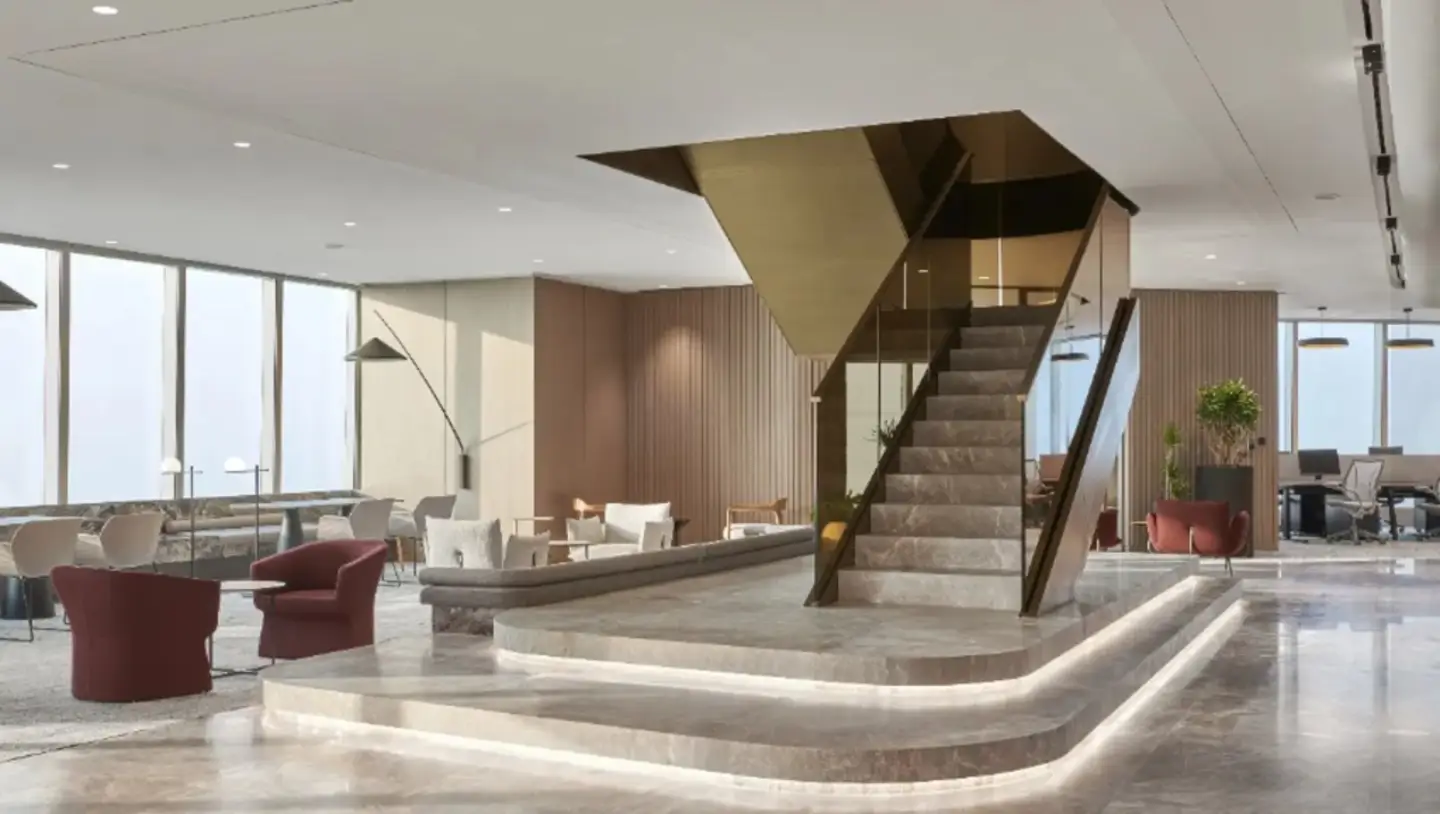
Luxury is not limited to a beautiful reception counter or polished flooring. It is also expressed in clean lines, aligned materials, properly operating doors, balanced lighting, reliable HVAC performance, and details that remain intact after daily use.
Hidden work deserves the same attention. Incorrectly coordinated electrical, plumbing, ventilation, or fire-life-safety work can create future operating issues and disrupt finished surfaces when repairs are needed. Quality control must follow the project from rough-in through final punch, not appear only at the end.
How to Evaluate Contractors Before You Award the Project
Price matters, but the lowest initial proposal may not represent the lowest project cost. A proposal that excludes after-hours labor, mall fees, permit coordination, protection requirements, or long-lead procurement can look attractive until those needs become additional charges.
Ask each contractor to explain how the scope was developed. A dependable proposal should make assumptions visible and identify exclusions clearly. Transparency is not a sales phrase. It is the practical ability to see what is included, what remains uncertain, and who is responsible for resolving it.
Portfolio relevance also matters. Look beyond attractive photographs. Ask whether the contractor has delivered occupied retail environments, branded interiors, clinics, office spaces, or other commercial projects where timing and finish quality directly affected the client’s operation. Completed work should demonstrate control of detail, not only design ambition.
Communication is equally revealing. During preconstruction, notice whether questions are answered directly, whether risks are raised early, and whether the contractor can explain technical issues without creating confusion. A project team that is vague before award rarely becomes more organized once construction begins.
The Value of Preconstruction for Retail Tenants
Many tenant improvement problems begin before the contract is signed. The design may be attractive but difficult to build within the available budget. Existing conditions may not support the planned equipment. A landlord requirement may conflict with a brand feature. Materials may be specified without regard to lead time or maintenance needs.
Preconstruction creates room to resolve these matters while options are still available. The contractor can help compare alternatives that preserve the design intent while improving cost, durability, availability, or installation efficiency.
This is not an argument for reducing quality. It is a method for spending where quality has the greatest effect. A client may choose to protect premium millwork, lighting, flooring, and customer-facing details while selecting practical solutions for back-of-house areas. The right approach depends on the brand, lease term, traffic level, and operating model.
For example, a short-term retail activation may prioritize speed, modularity, and cost control. A long-term clinic or luxury boutique may justify greater investment in durable finishes, acoustic comfort, custom joinery, and carefully integrated building systems. Both can be successful projects when the decisions are deliberate.
Build for Opening Day and the Years After
The final week of a mall fit-out is often compressed. Fixtures arrive, technology is installed, merchandise is staged, staff begins training, and property management completes final reviews. The construction team must close punch-list items without interfering with these activities.
A professional handover includes more than a clean space. It should provide confidence that systems have been tested, work has been inspected, outstanding details have a defined resolution path, and the client understands what has been delivered. This is where disciplined documentation and responsive service become part of the finished product.
At KADL Contracting Co. LLC, this standard is rooted in controlled budgets, on-time delivery, transparent coordination, and careful attention to the details that define a commercial environment. The objective is not to move quickly at the expense of the result. It is to deliver a space that is ready to operate and worthy of the brand it represents.
A Better Standard for Your Next Mall Location
Selecting a contractor is a decision about risk as much as construction. The right partner protects the project from avoidable surprises, keeps decisions visible, and respects the fact that every lost day affects the business beyond the job site.
Choose a team that can coordinate the mall’s requirements, your brand’s expectations, and the practical realities of construction with equal discipline. When execution is managed well, opening day feels less like a recovery effort and more like the start of a space built to perform.