
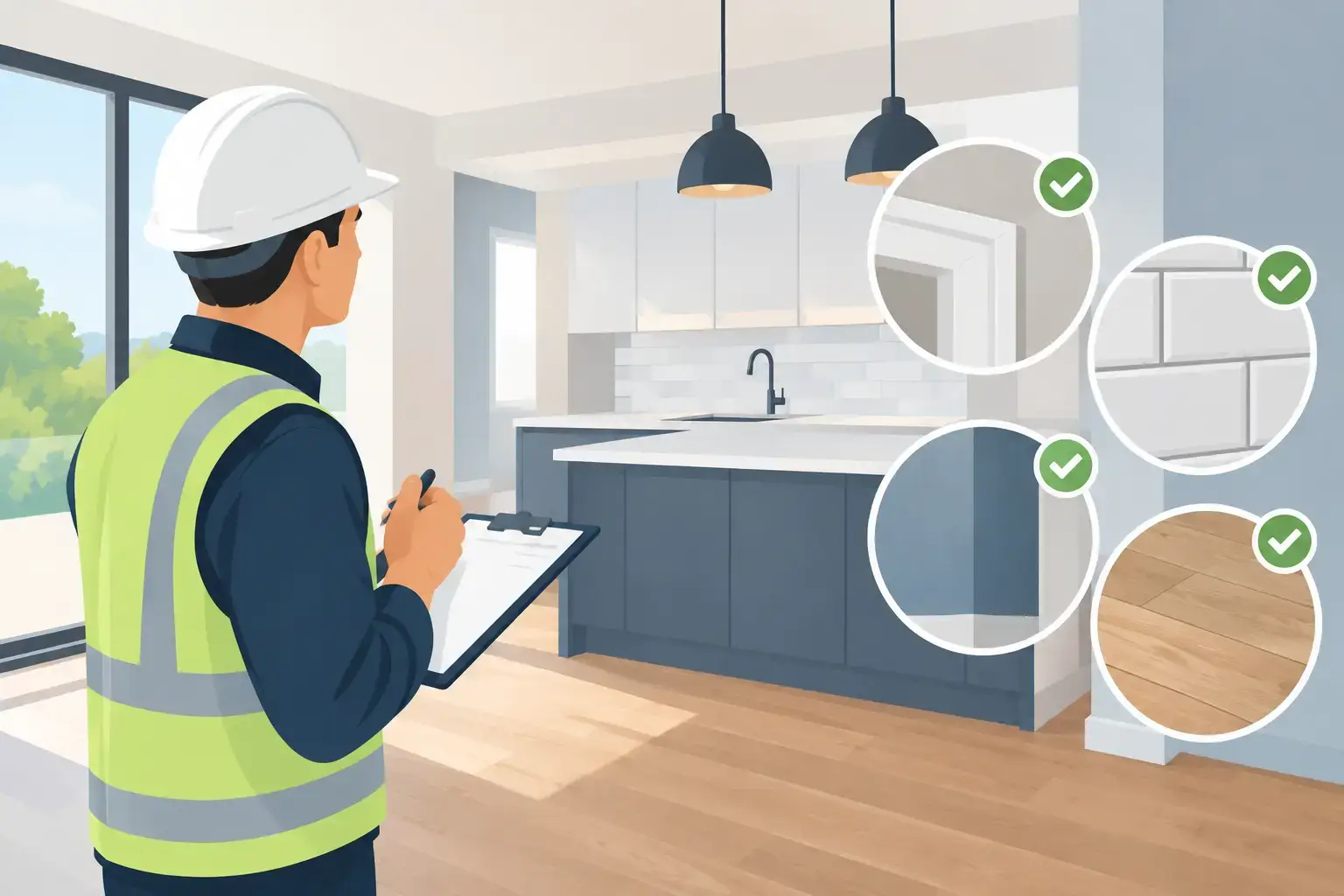
A polished commercial space can look complete from the doorway while still hiding issues that affect operations, maintenance, and brand perception. A contractor workmanship review gives owners and project leaders a disciplined way to assess whether the finished environment meets the agreed standard before final acceptance, payment, or opening day.
For a clinic, academy, retail location, or corporate office, this review is not about searching for minor imperfections for their own sake. It is about confirming that the space functions as intended, reflects the brand, and can withstand daily use. The right review protects the investment made in design, materials, schedule, and customer experience.
Why a Contractor Workmanship Review Matters
Commercial fit-out projects bring many trades into one finished environment. Flooring meets millwork, lighting meets ceilings, glazing meets partitions, and mechanical systems must work within carefully finished spaces. A weakness in one area can compromise the appearance or performance of another.
Workmanship reviews are most valuable because they turn broad expectations such as “high quality” into visible, verifiable standards. A door either closes correctly or it does not. A tile joint is either aligned and consistently spaced or it is not. A reception counter either has clean detailing, stable surfaces, and protected edges, or it requires correction.
The timing also matters. Once furniture is installed, teams move in, or customers begin using the space, repairs become slower and more disruptive. Fixing a ceiling alignment issue before occupancy is straightforward compared with closing part of a clinic or retail store after launch. A proper review gives the contractor a clear final opportunity to correct outstanding work while the project team is still mobilized.
Start With the Approved Scope, Not Personal Preference
The strongest review starts with the documents that defined the project: approved drawings, finish schedules, material samples, specifications, change orders, and any written agreements on mockups or quality benchmarks. These documents establish the standard against which completed work should be judged.
This distinction is essential. A stakeholder may prefer a different paint tone after seeing it across a large wall, but that is not necessarily a workmanship defect if the installed color matches the approved sample. Conversely, a beautiful finish is still unacceptable if it differs from the approved material without authorization.
Before walking the site, establish which areas are complete, which are still under active construction, and which items are awaiting client-supplied equipment or third-party work. A review should not confuse incomplete scope with defective scope. Both need to be tracked, but they require different actions, owners, and deadlines.
Review the Space in a Logical Sequence
Begin at the entrance and move through the site as a visitor, employee, or customer would. This perspective quickly reveals whether the finished space delivers the intended first impression. Look at sightlines, transitions between materials, reception areas, signage zones, lighting consistency, and the condition of high-touch surfaces.
Then inspect the space by trade and system. This second pass is more technical. Review partitions, ceilings, flooring, doors, millwork, glass, paint, plumbing fixtures, electrical accessories, HVAC grilles, and life-safety components. A room-by-room approach helps prevent omissions, particularly in repetitive areas such as classrooms, treatment rooms, offices, or fitting rooms.
Take photographs that show both the overall location and the specific concern. A close-up of a damaged panel is useful, but a wider image showing its position beside the main reception desk makes the item easier to locate and correct. Every observation should identify the room, the issue, the expected standard, the responsible party, and the target completion date.
What Quality Looks Like in Finished Commercial Interiors
High-quality workmanship is not limited to expensive materials. It is visible in consistency, precision, durability, and coordination. The best fit-out work appears controlled because details align across the whole space rather than looking individually acceptable but collectively disconnected.
Flooring should be level, securely installed, and free from chips, stains, hollow spots, lifting edges, and poor transitions. Patterned finishes deserve extra attention because misalignment is immediately visible in a lobby, corridor, or retail floor. At thresholds, adjacent materials should meet cleanly without unnecessary gaps, abrupt height changes, or unfinished edges.
Walls and ceilings should read as straight, clean, and intentional under normal lighting. Look along long runs of partitions and ceiling lines, especially where they meet glass, millwork, bulkheads, and feature finishes. Paint should have even coverage without roller marks, drips, patchy repairs, or overspray on neighboring surfaces. Minor touch-ups are normal near completion, but repeated defects across an area may indicate weak preparation or rushed finishing.
Millwork often carries the greatest visual weight in luxury commercial interiors. Inspect joints, reveals, veneer direction, edge banding, hardware alignment, door operation, and the condition of corners. Drawers and cabinets should open smoothly, close evenly, and align with adjacent panels. Countertops should be secure, level, and properly sealed where required. A reception desk or display unit may be a focal point, but it must also withstand frequent contact from staff and visitors.
Doors, frames, and hardware require both visual and functional checks. Doors should swing, latch, lock, and close without rubbing, excessive force, or gaps that look uneven. Hardware should be installed at consistent heights and free from scratches. In healthcare, education, and high-traffic environments, durability and cleanability deserve the same attention as appearance.
Test What Cannot Be Judged by Appearance Alone
A space may photograph well while critical systems remain untested. Switch lights and controls on and off. Test outlets, data points where applicable, plumbing fixtures, exhaust systems, thermostats, access controls, doors, and installed equipment interfaces. Confirm that HVAC grilles are clean, secure, and positioned as planned, especially near feature ceilings or sensitive work areas.
Life-safety and accessibility items should receive formal attention, not a casual visual check. Exit paths must be clear, required signage must be installed, and fire-rated or emergency components must operate correctly. Accessibility requirements vary by project and jurisdiction, so the contractor and relevant project professionals should confirm compliance against the approved design and applicable code requirements.
Some issues are best handled by specialists. Water leaks, electrical performance concerns, HVAC balancing, fire alarm systems, and structural questions should not be resolved through a general walkthrough alone. The workmanship review should identify the concern and trigger the correct test, documentation, or professional inspection.
Use a Punch List That Drives Closure
A punch list is effective only when it is specific enough to be acted upon. “Fix reception area” creates confusion. “Repair chipped laminate at the right side of reception counter, match approved finish, and remove adhesive residue” creates accountability.
Each item should be categorized by priority. Defects that affect safety, code compliance, water intrusion, security, or the ability to open should be addressed first. Functional items come next, followed by visual corrections that affect the presentation of the space. Cosmetic does not mean unimportant in a premium environment, but priorities should reflect operational risk.
A practical punch list generally records these details:
- Exact location, including room or grid reference where available
- Description of the defect or incomplete work
- Reference to the drawing, sample, or agreed standard
- Responsible contractor or trade
- Photo, due date, and final verification status
Avoid accepting verbal promises without documentation. A transparent contractor should be comfortable reviewing each item, confirming responsibility, and providing a realistic closeout schedule. The goal is not to create friction. It is to ensure that every agreed correction has a clear path to completion.
Look Beyond the Final Walkthrough
The final walkthrough is only one part of project closeout. Owners should also receive the practical information needed to operate and maintain the space. Depending on the scope, this may include warranties, maintenance guidance, product data, paint references, equipment manuals, as-built information, testing records, and keys or access credentials.
This documentation matters long after the construction team leaves. When a replacement part is needed, a facilities manager should not have to guess which hardware, finish, or fixture was installed. Well-organized closeout records reduce future maintenance delays and help preserve the quality of the original fit-out.
It is also wise to agree on the process for warranty-period concerns. Some materials and systems may show issues only after regular use, seasonal temperature changes, or cleaning routines begin. Clear communication after handover is part of dependable project delivery, not an optional extra.
A Review Should Protect the Relationship, Not Strain It
The best contractor-client relationships are built on direct communication and shared standards. A detailed review is not a sign of distrust. It is evidence that both sides take the finished environment seriously.
For owners, the right approach is to be prepared, specific, and fair. For contractors, the standard is to respond quickly, correct issues with care, and stand behind completed work. Quality control works best when it is part of the project from the first approved sample through final handover, not something added at the end.
Before your space opens, give the completed work the same level of attention that went into the original vision. A disciplined review helps ensure the final result is not merely finished, but ready to represent your business every day.